

Why Am I Getting Pimples Every Week?
You’re likely getting pimples every week because the underlying acne process is still active. Hormonal changes, clogged pores, excess oil, stress, skincare or hair products, friction, certain medications, genetics, and skin irritation can all contribute to recurring breakouts. A consistent, gentle, acne-focused skincare routine can help, but persistent or painful acne may require evaluation by a dermatologist.
9 Reasons Why I Am Getting Pimples Every Week?
Weekly breakouts usually happen because the underlying acne process is still active. Your pores can continue becoming clogged and inflamed even while previous pimples are healing.
Acne is associated with four main processes: excess oil production, clogged hair follicles, bacteria within affected follicles, and inflammation. Because these processes can continue simultaneously, new pimples may appear before older ones disappear.
Common reasons for recurring pimples include:
-
Hormonal fluctuations
-
Excess oil and clogged pores
-
Stress
-
Comedogenic or irritating skincare and hair products
-
Touching, picking, or squeezing the skin
-
Friction and pressure
-
Certain medications
-
Genetic predisposition
-
An inconsistent or overly aggressive skincare routine
1. Hormonal Changes May Be Triggering Your Breakouts

Hormonal fluctuations are a common reason for recurring acne, particularly when pimples appear in a predictable pattern.
Hormones called androgens can stimulate the sebaceous glands, increasing oil production. Hormonal fluctuations can contribute to acne during puberty and can also affect adults. In some women, breakouts may become more noticeable around the menstrual cycle, pregnancy, perimenopause, or menopause.
If you repeatedly notice pimples around the same time each month, tracking your breakouts alongside your menstrual cycle may help you identify a pattern.
2. Your Pores May Be Getting Clogged Repeatedly

Recurring pimples can occur when oil and dead skin cells repeatedly block hair follicles.
A clogged follicle can develop into a whitehead or blackhead. When inflammation develops, the lesion may become a red pimple or pustule. Deeper inflammation can produce painful nodules or cysts.
This is why simply removing one visible pimple doesn’t necessarily stop the next one from forming.
An acne routine generally needs to address the tendency to develop new clogged pores, not just the pimples you can already see.
3. Your Skincare or Hair Products Could Be Contributing
Some oily or pore-clogging products can contribute to breakouts, especially when they repeatedly contact acne-prone skin.
Look for products labeled non-comedogenic, non-acnegenic, or oil-free when possible. This applies not only to moisturizers and makeup but also to sunscreen and hair products that may come into contact with the forehead, temples, or cheeks.
If your breakouts are concentrated around your hairline or forehead, review the products you regularly use on your hair and scalp.
4. Stress May Be Making Your Acne Worse
Stress does not necessarily cause acne on its own, but it can worsen existing acne.
Research and dermatology guidance recognize an association between stress and acne flare-ups. Stress-related hormonal changes can influence oil production and inflammation.
If your weekly breakouts became more frequent during a stressful period, stress may be one contributing factor.
Rather than relying on stress reduction alone as an acne treatment, consider it one part of a broader approach to managing recurring breakouts.
5. You May Be Touching or Picking Your Skin

Frequent touching, squeezing, or picking can make acne more inflamed and increase the risk of scarring.
It can be tempting to squeeze a pimple as soon as it appears, but manipulating acne can worsen inflammation and potentially contribute to infection or scarring. Dermatologists recommend resisting the urge to pop or squeeze acne.
If you repeatedly touch your face throughout the day, becoming more conscious of that habit can be a useful part of your skincare routine.
6. Friction and Sweat Could Be Triggering Breakouts

Repeated pressure, friction, heat, and sweat can contribute to acne in some people.
Items such as tight collars, helmets, straps, or other equipment can irritate acne-prone areas. Exercise itself isn’t necessarily a problem, but sweat and friction can contribute to breakouts when combined with other acne-promoting factors.
After strenuous activity, cleanse your skin gently rather than aggressively scrubbing it.
7. Washing Your Face Too Much Can Backfire
More washing does not necessarily mean fewer pimples.
Aggressive scrubbing, harsh cleansers, facial scrubs, and excessive washing can irritate the skin. Irritation may make acne more noticeable and harder to manage.
A consistent, gentle routine is generally preferable to repeatedly changing products or trying to “strip” oil from the skin.
8. Certain Medications Can Trigger Acne

Some medications can contribute to acne or make existing acne worse.
Examples associated with acne include certain corticosteroids, testosterone, lithium, and some medications used for other conditions.
If your recurring pimples started after beginning a medication, don’t stop the medication on your own. Instead, discuss the timing with the prescribing clinician.
9. Your Acne May Simply Need Consistent Treatment
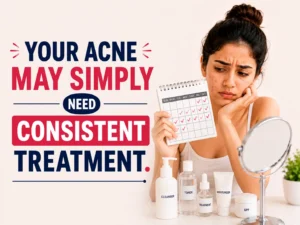
One of the biggest reasons acne keeps returning is that acne treatment takes time and needs consistency.
Many acne treatments do not produce immediate results. Depending on the treatment, noticeable improvement can take several weeks, and some treatments require longer-term use to maintain control. The AAD notes that people often need at least 6 to 8 weeks to begin seeing fewer breakouts with an appropriate treatment plan.
Changing products every few days because you haven’t seen immediate results can make it difficult to determine what is actually helping.
How Can I Stop Getting Pimples Every Week?
The goal is to prevent new acne from forming, not just treat individual pimples after they appear.
A practical acne-friendly routine can include:
-
Cleanse gently rather than scrubbing aggressively.
-
Choose non-comedogenic skincare and makeup.
-
Avoid picking or squeezing pimples.
-
Cleanse after heavy sweating or exercise.
-
Review hair products if breakouts occur around the hairline.
-
Use evidence-based acne treatments consistently rather than switching products constantly.
-
Give treatment enough time to work before judging the results.
-
See a dermatologist if acne is persistent, painful, severe, scarring, or not responding to appropriate self-care.
Depending on the type and severity of acne, dermatologists may recommend treatments such as topical retinoids, benzoyl peroxide, salicylic acid, azelaic acid, antibiotics, or hormonal therapies. The appropriate treatment depends on the individual and should be selected accordingly.
Why Do I Get a New Pimple After One Just Heals?
A new pimple appearing after an old one heals does not necessarily mean the first pimple “caused” the second one. Acne can involve multiple follicles at different stages of clogging and inflammation.
One spot may be healing while another follicle is becoming clogged beneath the skin. This can create the impression that you’re constantly developing new pimples.
That is why prevention-focused acne treatment is generally more useful than repeatedly treating only visible spots.
When Should I See a Dermatologist for Weekly Breakouts?
Consider seeing a dermatologist if your acne:
-
Keeps returning despite consistent skincare and appropriate over-the-counter treatment
-
Includes painful nodules or deep lesions
-
Is leaving scars or persistent dark marks
-
Is spreading to your chest or back
-
Is significantly affecting your confidence or emotional well-being
-
Has suddenly become severe
Moderate or severe acne may require prescription treatment, and early effective treatment can help reduce the risk of scarring.
Final Takeaway
Getting a new pimple every week doesn’t necessarily mean you’re doing something wrong. Acne is an ongoing skin condition in which new clogged and inflamed follicles can develop while older breakouts are healing.
Instead of attacking every new pimple with a different product, focus on identifying recurring triggers and maintaining a consistent routine. Avoid picking, choose non-comedogenic products, cleanse gently, and give evidence-based treatments enough time to work.
If weekly breakouts continue, become painful, or begin leaving scars, professional evaluation is worthwhile. The right acne treatment is usually about controlling the process that creates new pimples—not simply drying out the pimples you already have.
